A reflection from this week’s Jummah khutbah in Rainham on Muslim identity, steadfastness, and raising the next generation to be proud of their faith
There is absolutely nothing embarrassing about saying “I believe in Allah.” That simple sentence was the starting point for this week’s Jummah khutbah — a reminder of why Allah ﷻ created us, what He has blessed us with, and why our identity as Muslims is something to hold onto with pride, not something to soften or hide.
Identity Rooted in the Qur’an: The Lesson After Uhud
The khutbah opens with the aftermath of the Battle of Uhud, a moment when the Muslim community had suffered real loss and was grieving. It was at that exact low point that Allah revealed one of the most powerful reminders in the Qur’an: “wa la tahinu wa la tahzanu wa antumu al-a’launa in kuntum mu’minin” — do not weaken, and do not grieve, for you will be superior if you are true believers.
The point is simple but profound: our honour as Muslims was never meant to depend on circumstances, outcomes, or what other people think of us. It comes from Allah. That means our identity — our name, our appearance, our prayer, our visible faith — isn’t something to apologise for, whatever situation we find ourselves in.
Bilal ibn Rabah: Faith That Could Not Be Broken by Torture
To show what that unshakeable identity looks like in practice, the khutbah turns to the story of Bilal ibn Rabah (RA). Enslaved and tortured under the scorching sun of Makkah, pressed to renounce his faith, Bilal’s response was never anything but “Ahad, Ahad” — the One, the One — a declaration of Allah’s oneness repeated through his suffering. His identity as a believer was not negotiable, even under the most extreme physical pressure imaginable.
Abdullah ibn Hudhafa: Holding Firm Under the Khilafah of Umar
The khutbah then moves to a lesser-known but equally powerful account: Abdullah ibn Hudhafa (RA), captured and placed under severe pressure to abandon Islam during the time of Umar ibn al-Khattab (RA). Despite threats and extreme conditions, he held firm — a reminder that this kind of steadfastness wasn’t confined to the earliest, hardest years of Islam, but continued to be tested, and upheld, throughout the generations of the Sahabah.
The People of the Ditch: A Child, a King, and a Community That Chose the Fire
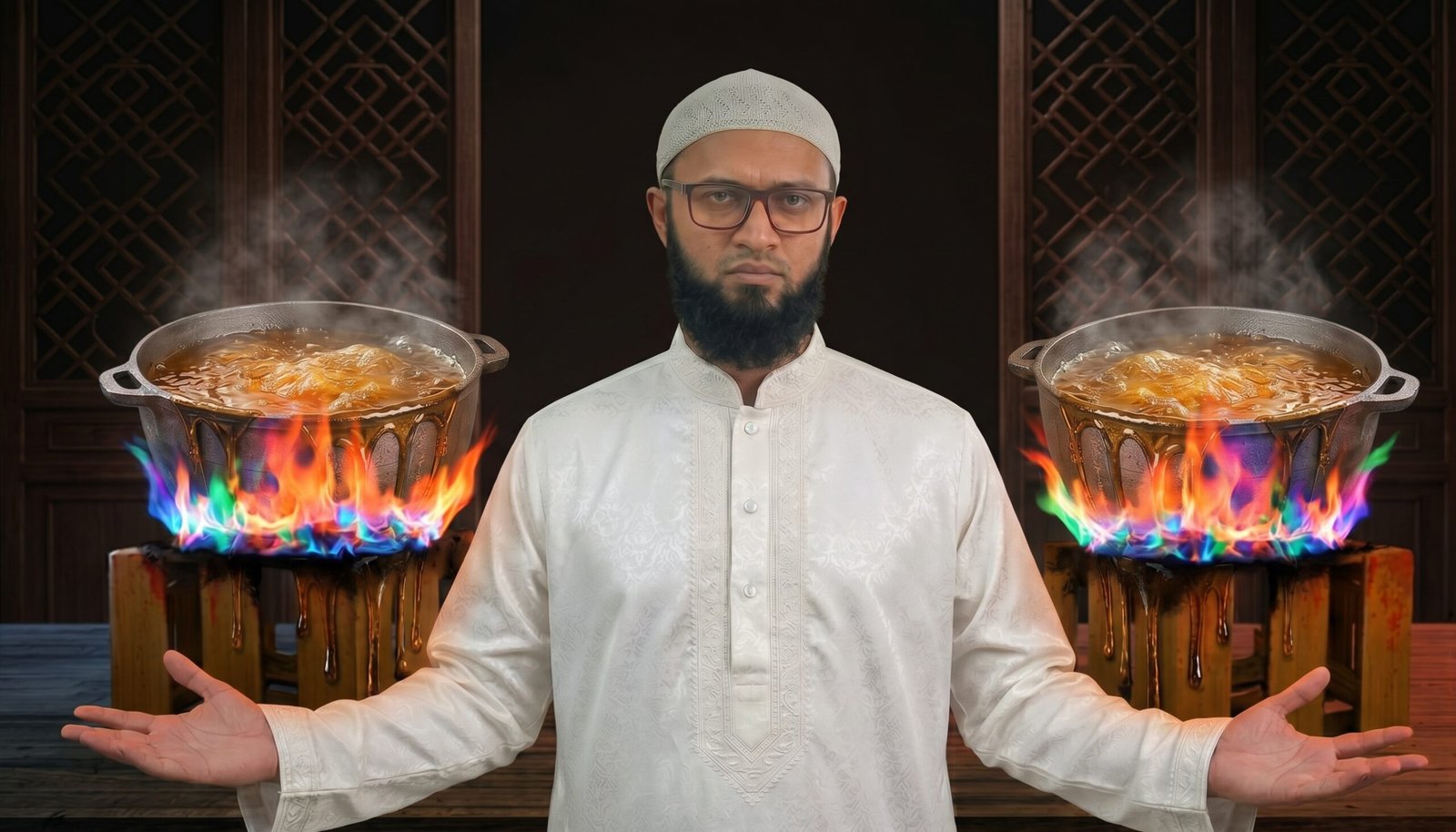
The centrepiece of the khutbah is the story of Ashab al-Ukhdud — the People of the Ditch — from Surah al-Buruj. It tells of a young boy whose miracles, performed only “in the name of Allah, the Lord of the boy,” led a tyrannical king to try to kill him by every means possible, each attempt failing until the boy himself instructed the king on how it could be done — knowing it would lead the watching crowd to declare their faith in Allah.
Enraged at the mass conversion that followed, the king ordered ditches dug and fires lit, giving his people a choice: renounce their faith or be thrown in. Among those who faced that choice was a woman holding her newborn baby, who hesitated for a moment out of maternal love and fear — until, miraculously, her own infant spoke to her, reassuring her, “O my mother, be patient, for you are upon the truth.” Mother and child were martyred together moments later.
It’s a story that still unsettles us today for good reason. It shows faith held firm even in the face of the ultimate test, and the khutbah draws from it a reminder that Allah’s capability is without limit, even when our own resources and strength feel small.
The Battle of the Hearts: Responding to Hostility With Character
Not every test of Muslim identity looks like martyrdom. Far more often, it looks like mockery, pressure, or casual hostility in everyday life — and the khutbah is clear that the response to this is not retaliation. Citing Qur’an 41:34 — “good and evil can never be equal; repel evil with that which is better” — and the guidance in Surah an-Nahl to invite others to the way of Allah “with wisdom and good instruction,” the khutbah frames this as the real battle: a battle of the hearts, won through excellent character, patience, and da’wah, not confrontation.
Islamophobia and hostility, the khutbah reminds us, should never be allowed to push us toward hiding or diluting who we are. If anything, they are the very reason to let our character speak for us.
Raising the Next Generation With a Confident Muslim Identity
The khutbah closes with practical guidance for parents, starting from birth: playing the Qur’an around newborns, teaching toddlers from an early age that every blessing comes from Allah, and helping children develop a confident, happy sense of their Muslim identity by the ages of four and five.
From there, the focus shifts to Islamic education between the ages of five and sixteen — not just so that children know the rules of the deen, but so they grow up able to confidently explain and defend their faith to others. The khutbah draws out a striking contrast: many parents will happily drive their child 20–30 minutes to a “better” school for worldly education, but hesitate to make the same effort when it comes to their Islamic education, choosing whatever maktab is most convenient instead. The challenge laid down is to apply the same standard — even more so — to the nurturing of our children’s deen.
The khutbah ends with a dua: that Allah grant us the opportunity to strengthen our own iman, to raise the next generation with the correct aqeedah and tawheed, and that our children grow up happy and proud to be believers — able, when asked, to tell others exactly what they love about Islam.
🕌 Join us for Jummah prayer in Rainham — help us build a permanent home for the Muslim community here.
📍 rainhammercy.com
Frequently Asked Questions
What does it mean to cherish our Muslim identity?
It means recognising that our worth and honour as Muslims come from Allah, not from how others perceive us, and living that out visibly and confidently — through our names, appearance, worship, and character — rather than softening or hiding our faith under social pressure.
Who was Bilal ibn Rabah?
Bilal ibn Rabah (RA) was an enslaved companion of the Prophet ﷺ who was tortured in Makkah for his faith. He is remembered for refusing to renounce Islam under torture, repeating “Ahad, Ahad” (the One) throughout his suffering, and later became the first muezzin in Islam.
What is the story of the People of the Ditch (Ashab al-Ukhdud)?
It’s an account from Surah al-Buruj of a community, including a young boy and a mother with her infant, who were martyred in burning ditches by a tyrannical king rather than renounce their faith in Allah — a story illustrating absolute steadfastness in belief.
How should Muslims respond to Islamophobia or hostility according to this khutbah?
Not with retaliation, but with good character, patience, and wisdom — described as the “battle of the hearts.” The khutbah cites Qur’an 41:34 and Surah an-Nahl, which call for repelling evil with what is better and inviting others to faith with wisdom and good instruction.
What practical advice does the khutbah give for raising Muslim children?
Start from birth — surrounding newborns with the Qur’an, teaching toddlers that blessings come from Allah, and building a confident Muslim identity by ages four to five. It also urges parents to prioritise strong Islamic education between ages five and sixteen with the same seriousness they’d give to a child’s mainstream schooling.

Leave a Reply