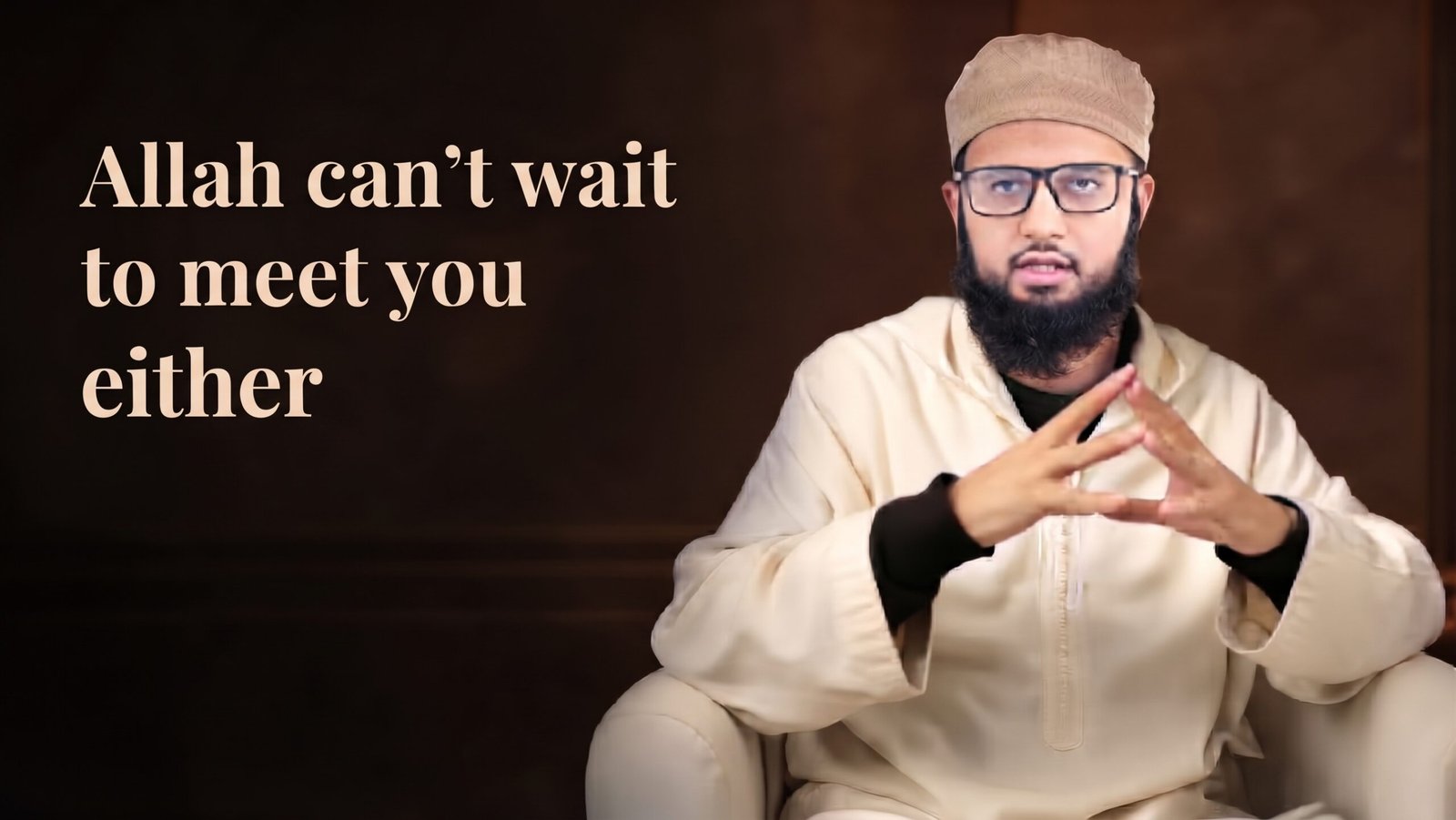
If you asked most of us whether we love Allah, the answer would come instantly: of course. This week’s Jummah khutbah in Rainham pushed past that easy answer and asked a harder one — not whether we say we love Allah, but what we have actually given up to prove it.
Al-Wadud: The Most Loving
The khutbah opens with the hadith in which a man asked the Prophet ﷺ about the Day of Judgment, and was given a simple but profound answer: “You will be with the one whom you love.” That single sentence reframes everything — our eternal company isn’t decided only by our deeds in isolation, but by where our heart’s attachment truly lies.
From there, the khutbah turns to Allah’s name Al-Wadud, the Most Loving — a name used only twice in the Qur’an, including in Surah Al-Buruj in the account of the People of the Ditch. And the khutbah makes a point of showing what this love looks like in practice: the greatest expression of love has always been sacrifice, not sentiment.
Ibrahim and Ismail: A Love Built, Not Assumed
To illustrate this, the khutbah returns to the story of Ibrahim (AS) and his son Ismail (AS) — the command to sacrifice his own son, and Ismail’s calm response: to do as he was commanded, trusting he would be found among the patient. But the khutbah is careful to point out that this level of submission did not appear out of nowhere. Ismail grew up watching his father Ibrahim struggle, again and again, for the sake of Allah — from the trial of being left as an infant with his mother Hajar in the desert, to building the Kaaba together with his father under the heat of Makkah. Love of Allah, the khutbah teaches, is nurtured through tarbiyah and a lifetime of small sacrifices. It is not automatic, even for a prophet’s household.
This Life Is a Test — and We Are Not Dead to It
The khutbah widens the lens with a reminder from Surah Al-Imran: that those killed for the sake of Allah must never be thought of as dead — “Indeed, they are alive, with their Lord, provided for.” This life, the khutbah stresses, is the life of a test, and Allah mentions in Surah At-Tawbah that He tests those He loves precisely to refine them, purify them, and increase them in iman — not to break them.
The Challenge of Surah At-Tawbah: What Do You Love More?
The khutbah draws directly on a striking verse from Surah At-Tawbah (verse 24): if your fathers, your sons, your spouses, your family, the wealth you have gathered, your businesses, and the homes you are pleased with are more beloved to you than Allah and His Messenger and striving in His path, then wait for Allah’s command to come. It’s a direct challenge aimed at exactly the things most of us hold dearest — family, money, comfort — and asks plainly whether any of them have quietly taken Allah’s place in our hearts.
Small Tests, Every Single Day
The khutbah brings this question down to daily life. Waking for Fajr when sleep is calling. Walking away from an opportunity to sin, even when no one would know. These, the khutbah says, are small tests — brick by brick, stone by stone — that either build us or break us, often without our even realising it. And it draws a sobering warning from Surah At-Taghabun: that even our spouses and children can become a fitna, a trial and a source of corruption, if they distract us from our purpose. The khutbah shares a personal reflection on reciting this verse at home and being asked by a family member what it even means — a reminder that the warning is worth pausing on, not rushing past.
Raising Children Who Understand the Cost
A central challenge of the khutbah is aimed squarely at parents: our children will never understand the importance of deen if we never show them through our own actions. Did we bring them to salah? To classes? To community events? Or did we tell ourselves we don’t have the knowledge, or the time — forgetting that we have twenty to thirty years to acquire that knowledge, and that scholars today are more accessible than they have ever been in history. The khutbah is blunt: by the time children are 15, 18, or 20, it is often too late to start. This, it says, is the level of sacrifice we are being asked to make — for the sake of Allah, not for ourselves.
“Everything Becomes Small”: The Poetry of Abu Firas al-Hamdani
The khutbah brings in the words of the Abbasid-era poet Abu Firas al-Hamdani (d. 357 AH), who wrote that if he receives love from Allah, then everything becomes small and easy — because everything above the earth will eventually turn to sand anyway. When love of Allah is in its rightful place, the khutbah teaches, every sacrifice we make for His sake shrinks in comparison to what we stand to gain.
How Allah Announces His Love
The khutbah closes with one of the most moving hadiths on this subject: that when Allah loves a servant, He calls Jibreel (AS) and tells him of that love. Jibreel then loves that servant and announces it to all the inhabitants of the skies, who in turn love him and announce it further — until acceptance of that person is written on the earth itself. People come to love them without even knowing why, the way communities can hold deep love and attachment to a scholar’s memory and recordings long after they have passed away. This, the khutbah says, is the promise of Allah to those who are willing to sacrifice for His sake.
The khutbah closes with a dua: that Allah grant us the tawfiq and ability to make real sacrifices, to prove our love and our worth to Him, to enter Jannatul Firdaus, and to pass this legacy of love and sacrifice on to the next generation.
🕌 Join us for Jummah prayer in Rainham — help us build a permanent home for the Muslim community here.
📍 rainhammercy.com
Frequently Asked Questions
What does Al-Wadud mean?
Al-Wadud is one of the names of Allah, meaning the Most Loving. It appears only twice in the Qur’an, including in Surah Al-Buruj, and reflects Allah’s deep love and care for His servants.
What is the lesson from the story of Ibrahim and Ismail in this khutbah?
The khutbah teaches that Ismail’s willingness to submit to Allah’s command wasn’t automatic — it was built over years of watching his father Ibrahim (AS) make repeated sacrifices for Allah’s sake, from the trial in the desert to building the Kaaba. Love of Allah is nurtured through tarbiyah and sacrifice, not assumed.
What does Surah At-Tawbah say about loving family and wealth more than Allah?
Surah At-Tawbah (verse 24) warns that if a person’s fathers, children, spouses, wealth, and homes become more beloved to them than Allah, His Messenger, and striving in His cause, they should wait for Allah’s command — a direct challenge to examine where our hearts are truly attached.
How can family become a fitna according to the khutbah?
Drawing on Surah At-Taghabun, the khutbah explains that spouses and children, while blessings, can become a trial (fitna) if they distract a person from their purpose and relationship with Allah — something the Qur’an explicitly warns believers to be wary of.
What is the hadith about Allah announcing His love for a servant?
It describes how, when Allah loves a servant, He tells Jibreel (AS), who then loves that servant and announces it to the inhabitants of the skies, who in turn announce it further — until acceptance of that person is written on the earth, and people come to love them without knowing why.
